

Thy Catafalque Announce New Album XIII: Sárga erdő
2x Hungarian Grammy Winner Approaches the Past from a New Direction on Quietly Expansive Thirteenth Album
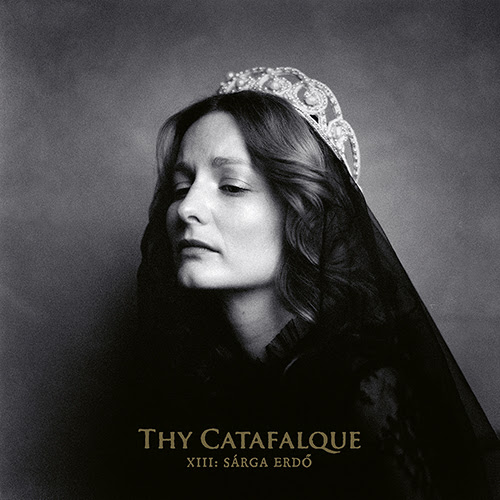
Thy Catafalque, the two-time Fonogram winning project of Tamás Kátai, is announcing its thirteenth album, XIII: Sárga erdő.
On XIII: Sárga erdő (Yellow Forest), Kátai wanders through an old, half-remembered time from a quietly expansive direction. Thy Catafalque’s new album features more than 30 collaborators, including a 20-person choir and, for the first time in the project’s history, a live drummer. However, the folk and classical elements that flooded 2024’s XII: A gyönyörű álmok ezután jönnek are handled here with a lighter touch. Just as a forest doesn’t explain its colors, the album turns inside you, until you look up to discover that you’re somewhere new.
Watch the music video for lead single “Búcsú a piros madártól” on the Season of Mist YouTube channel.
XIII: Sárga erdő comes out November 20, 2026 on Season of Mist.
Pre-order https://orcd.co/thycatafalquesargaerdo
Pre-save on Spotify https://orcd.co/thycatafalquesargaerdo
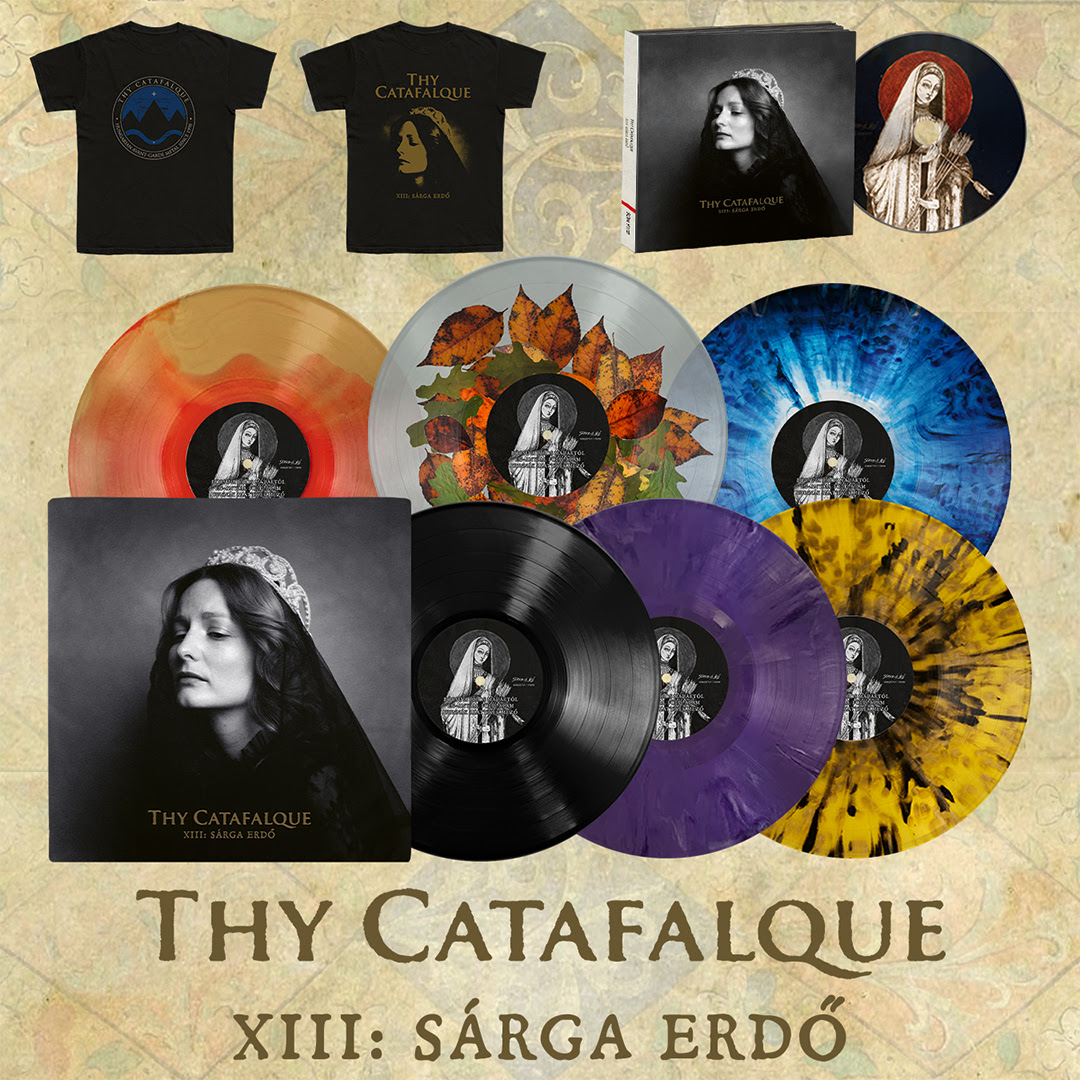
CD Mediabook
Digital Download
2×12” Vinyl Gatefold — Black
2×12” Colored Vinyl Gatefold — Purple, Black & White Marbled
2×12” Colored Vinyl Gatefold — Winter Lake (Blue, Crystal & Black Splatter)
2×12” Colored Vinyl Gatefold — Yellow Forest (Yellow, Gold & Black Splatter)
2×12” Leaves-Filled Vinyl Gatefold — Autumn Leaves, Crystal Clear
2×12” Colored Vinyl Gatefold — Golden Sunset (Red & Gold Sunburst)
Written and produced by Kátai, lead single “Búcsú a piros madártól” (A Farewell to the Red Bird) opens XIII: Sárga erdő on a note of departure and resignation. A voice calls after something already gone, its sound swallowed by fog and distance. Live drums sit under layered vocals, kamancheh and lead guitar, giving the song a heavier, more physical pull than its title suggests.
Kátai shot the music video for “Búcsú a piros madártól” himself in the woods a 10-minute walk from his family home in Makó, Hungary. Sitting beside the river Maros, these woods are the same stretch of ground where Thy Catafalque’s very first video was filmed 25 years ago (and where another is already in the works).
In the video, live footage from Thy Catafalque’s shows in Brazil, France and Hungary is cut together with hand-made and digital animation, left rough by design. “I wanted to keep it that way,” Kátai says, “because it has a more personal touch.”
Tracklist:
1. Búcsú a piros madártól (06:04)
2. Ég-anyám, föld-apám (04:28)
3. Dunnák alatt kék mező (04:04)
4. Szitakötő (01:10)
5. Suhamló éji fák (05:04)
6. Puszta (04:58)
7. Sirató (03:58)
8. Cseremisz (04:05)
9. Sárga erdő (10:15)
10. Tömbök (04:59)
11. Kút vizén nap forog (04:06)
12. 87 tavasz, 87 ősz (10:52)
Full runtime: 01:04:03
Country: Hungary (HU)
Genre: Avant-Garde Metal
FFO: Ihsahn, Dødheimsgard, Muzsikás, Solefald, Sebő Ensemble
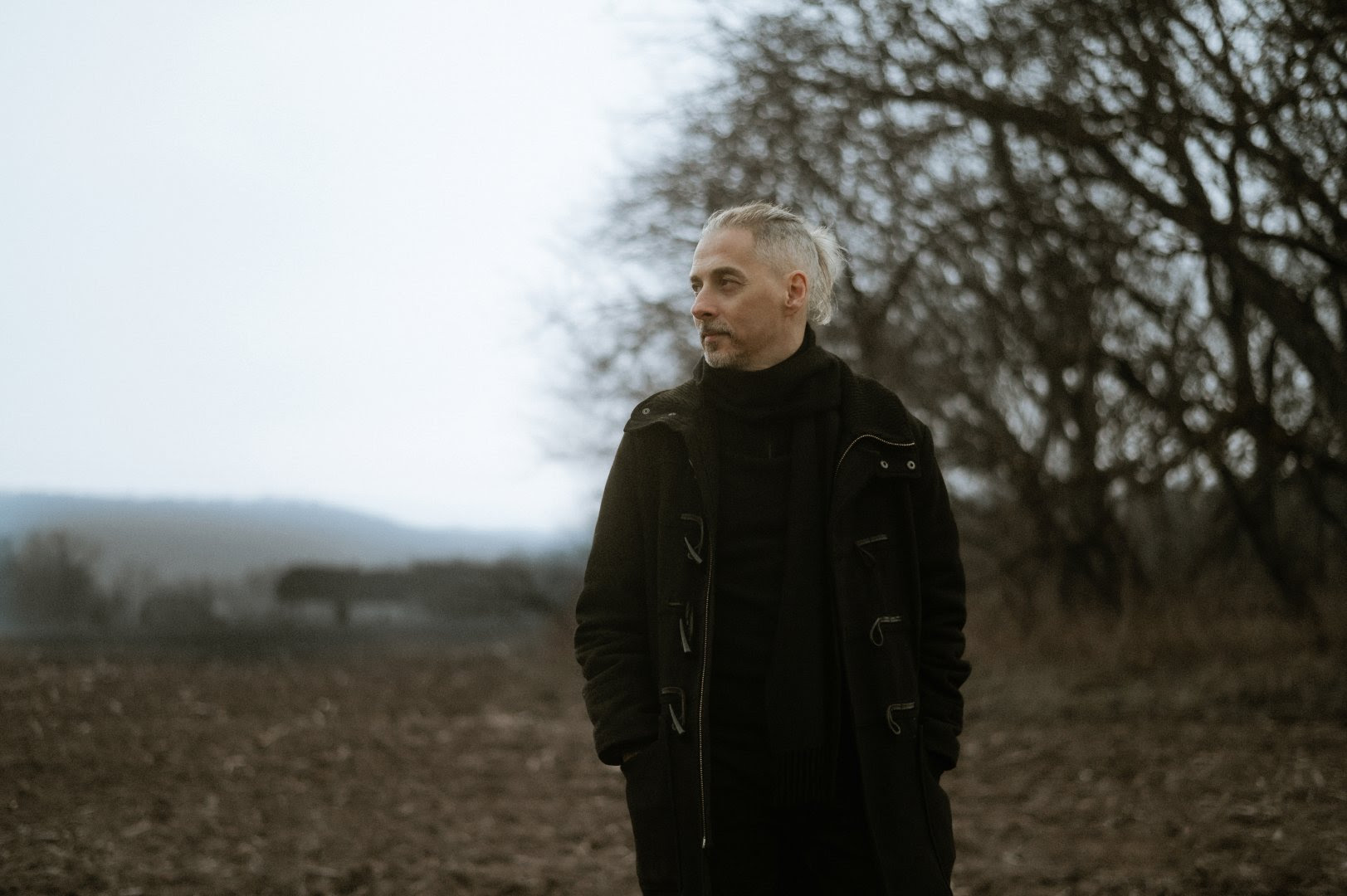
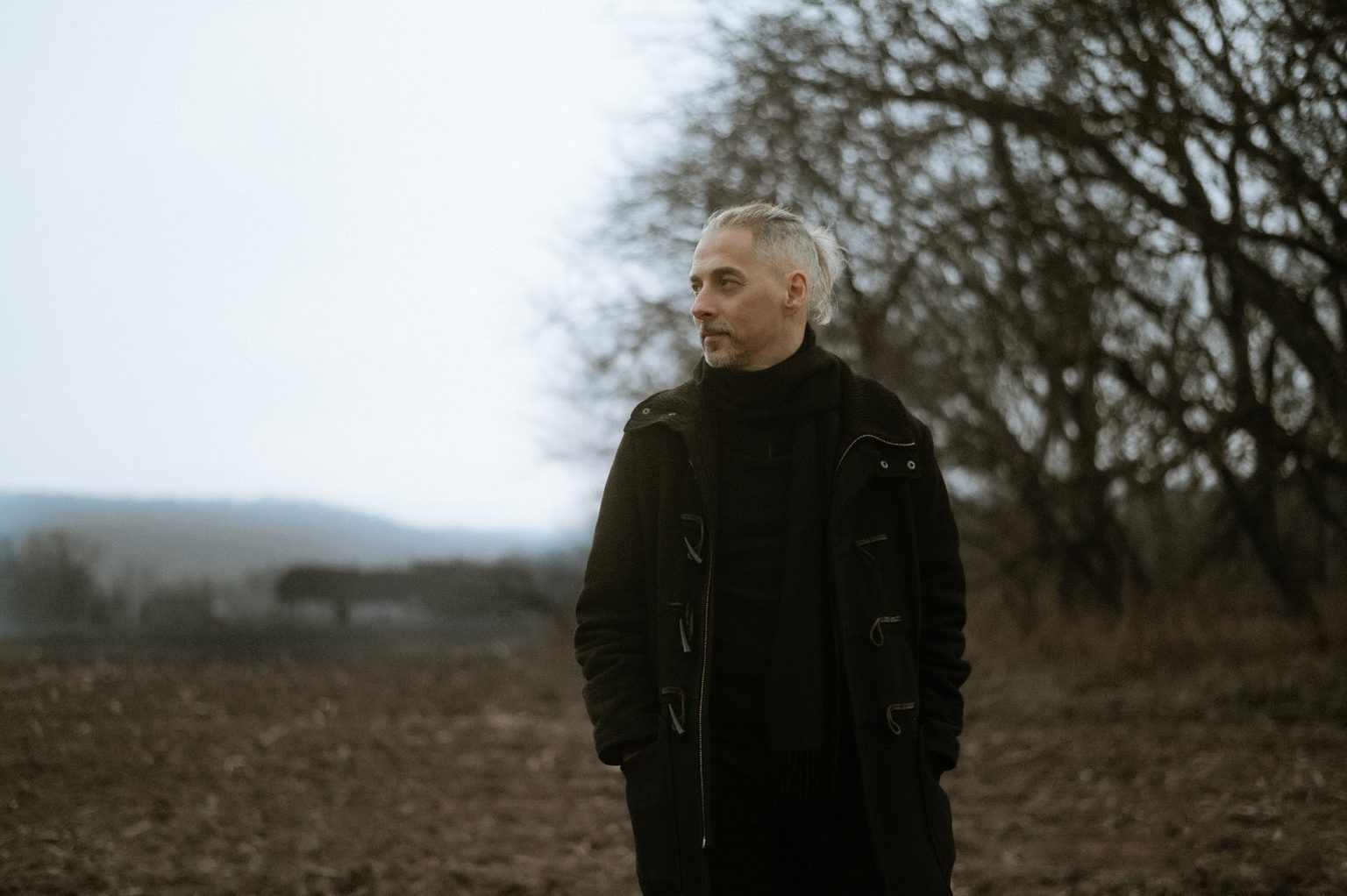
Yellow forests don’t stay yellow for long. That’s the image Tamás Kátai keeps returning to when he talks about THY CATAFALQUE‘s thirteenth album, Sárga erdő—a title that translates plainly and then unfolds into something less settled the longer you sit with it. There’s no single story running through the record’s twelve tracks, Kátai says, only a feeling: wandering through a forest built from old time, half-remembered and already turning colour. It’s the quietest premise he’s worked from in years, and perhaps even the most honest one yet.
Thy Catafalque began in Makó, in southeastern Hungary, in 1998, when Kátai and a bandmate named János Juhász put together a black metal project with no intention of ever playing it live. The name itself—catafalque, the platform that holds a coffin during a funeral rite—told you where the mood was headed before a single note was even heard. A year later, Sublunary Tragedies arrived through the Budapest label KaOtic Productions, tremolo-picked and grim in the way most things were grim in that corner of European metal at the time, though even then the seams were showing: this was never going to stay inside the genre’s lines.
It didn’t. Microcosmos followed in 2001, restless in ways the debut hadn’t dared to be, and when KaOtic folded, Kátai self-released 2004’s Tűnő Idő Tárlat rather than wait for another label to catch up to him. These were the years the project figured out what it actually was—not black metal with detours, but something closer to a single songwriter’s imagination refusing to be filed under anything.
Signing to the avant-garde label Epidemie Records in 2009 gave that imagination its first real audience. Róka Hasa Rádió became Thy Catafalque’s breakout, and it introduced a voice that would keep returning across the decades since: Attila Bakos, whose clean vocals still surface on Kátai’s records fifteen-plus years later, most recently on XII. But the real hinge point came in 2011, with Rengeteg—the first album Kátai wrote and recorded entirely alone, and his first for Season of Mist. From here on, Thy Catafalque wasn’t a band in any conventional sense. It was Kátai’s vision, executed with the help of whoever he needed to bring it to life, a model that would eventually mean twenty, thirty, sometimes three-dozen collaborators on a single record.
Sgùrr, Meta and Geometria carried that model through the back half of the 2010s, each one pushing the genre-hopping further—prog, electronica, jazz, Hungarian folk, all folded into records that critics increasingly struggled to categorize and increasingly stopped trying to. By the time Naiv arrived in 2020, Thy Catafalque had become something like Hungary’s most singular musical export, a reputation the country’s own industry made official the following year: Vadak, released in 2021, won the Fonogram Award—the Hungarian equivalent of a Grammy—for Best Hard Rock/Metal Album. That same year, something else changed. Thy Catafalque, for the first time in over two decades of existing purely as a studio project, played live—a single performance at the Fekete Zaj festival with twenty-six musicians onstage, later released as the concert album Mezolit. The project that had never intended to leave the studio had just proven it could fill a stage.
It’s kept proving that formula ever since. Alföld, in 2023, brought Thy Catafalque a second Fonogram win and a return to the heavier, more grounded sound of the project’s earliest years. XII: A gyönyörű álmok ezután jönnek followed in 2024, Kátai’s first album made with an outside producer—Gábor Vári, a longtime live collaborator who stepped behind the desk and helped shape a record New Noise called a five-star “celebration of the powers of music.” Thy Catafalque spent 2025 making its debut at Hellfest, Rockstadt Extreme and Alcatraz, and playing its first-ever shows in Latin America. A second European headline tour, opening at Budapest’s Dürer Kert in March 2026, has carried that momentum straight into the new album cycle.
Sárga erdő, out this autumn via Season of Mist, was recorded across various locations and at Miracle Sound Szeged with Gábor Vári again handling engineering, mixing and mastering. It marks another first for the project: real drums, played rather than programmed, for the first time in Thy Catafalque’s history. Thirty-four musicians and vocalists appear across the record, along with a twenty-voice male choir, but the folk and classical textures that flooded XII—sitar, kamancheh, zither, strings—are handled with a lighter touch here, chosen with more precision for the moments that call for them. There’s no unifying story across the twelve tracks, only that same felt sense of wandering through old, half-remembered time. A forest doesn’t explain its colours—it just keeps turning them, until you look up and you’re standing somewhere new.
Line-up:
Tamás Kátai — Guitar, Bass, Keyboards & Vocals
Production Credits:
Recorded in various locations and Miracle Sound Szeged, Szeged, Hungary.
Produced by Tamás Kátai; Sound Engineer, Mixing & Mastering by Gábor Vári (Miracle Sound Szeged).
Cover Art:
Tamás Kátai
Photography:
© Laszlo Horvath — Album Artwork
© Orsolya Karancz — Tamás Photos
© Katalin Hunyás — Live Band Photos
Guest Musicians:
Martina Veronika Horváth — Vocals (9, 12)
Ivett Dudás — Vocals (3, 10, 11)
Gábor Dudás — Vocals (2, 5, 11, 12)
Bálint Bokodi — Vocals (1, 8, 9)
Annamari Oláh — Vocals (6)
Lambert Lédeczy — Vocals (6)
Gergely Balla — Vocals (7)
Gábor Veres — Vocals (10)
Antal Cseh — Bass/Baritone Vocals (12)
The Male Choir of Tiszaföldvár — choir (8)
Anikó Für — Prose (5)
Árpád Szenti — Drums & Percussion
Krisztián Varga — Lead Guitar (1, 5, 6, 9, 10)
Zoltán Vigh — Lead Guitar (10)
Breno Machado — Lead Guitar (12)
Daniele Belli — Classical Guitar (12)
Anikó Barna — Citera & Koboz (8)
Chithrinie Nirupama — Sitar (4)
Peter Voronov — Violin (5)
Maria Grigoryeva — Violin (5)
Victor Morales — Violin & Piano (9)
Oleg Bezuglov — Violin (12)
Michaela Lilla Bos — Cello (9)
Francesco Pisciotta — String Arrangement (11)
Noam Dayan — Kamancheh (1)
Dmitry Karev — Accordion (8)
Dario Cei — Flute (8, 10)
Brandon Wilkins — Bassoon & Alto Flute (2)
Dan Rowland — Oboe d’Amore (7)
Kelly O’Donohue — Trumpet, Trombone & Flugelhorn (9, 11, 12)
Michele Fortunato — Trombone (12)
Patricio Böttcher — Alto Saxophone (3)
Efim Braylovskiy — Alto Saxophone (9)
Ibrahim Danbaba — Saxophone (11)
Follow Thy Catafalque
Website: https://www.thy-catafalque.hu/
Bandcamp: https://thycatafalque.
Facebook: https://www.facebook.com/
Instagram: https://www.instagram.com/thy_
X/Twitter: https://x.com/thycatafalque
Threads: https://www.threads.net/@thy_
TikTok: https://www.tiktok.com/@
Spotify: https://open.spotify.com/
Apple Music: https://music.apple.com/
Deezer: https://www.deezer.com/artist/
Tidal: https://tidal.com/browse/